Single Storey Extension Ideas: Things To Consider
A well-designed single-storey extension can completely change how you use your home. Rather than simply adding another room, the right extension can improve the entire


Are you considering a home extension and wondering if ChatGPT can do the planning permission legwork for you? While AI is great at giving answers and explaining the planning process in a nutshell, getting permission isn’t just a matter of asking a few questions.
AI has changed the way homeowners think about their home improvement projects. It’s now possible for AI to generate extension ideas, floor plans, and photorealistic images in the blink of an eye using tools like ChatGPT and AI-powered design software.
As a result, many homeowners are showing up to their first architect meeting with ideas they’ve come up with themselves. Some have used AI to create designs, while others have gathered inspiration from Pinterest, social media, or property websites.
Which raises an interesting question: can AI actually tell you whether your home extension is going to get planning permission?
While AI is great for gathering ideas, the truth is that getting permission is a whole lot more complicated than creating a pretty design. Knowing if a proposal will get approved requires a deep understanding of the local area, an eye for detail, and some real-world experience, all things that AI tools often can’t replicate.
In this guide, we’ll take a closer look at where AI can help, where its limitations lie, and why getting professional advice from an architect is still essential when planning an extension.
Make no mistake, AI has become a powerful tool for coming up with ideas. Homeowners can use it to play around with different layouts, experiment with design options, and get a rough idea of how an extension might look without breaking the bank on professional drawings.
For many people, that’s a great starting point. Instead of staring at a blank sheet of paper, they can quickly come up with ideas and get a better sense of what they want to achieve.
AI is particularly good at producing images that look amazing and suggesting creative design solutions. It can help homeowners communicate their preferences more clearly and often speeds up the early conversations about a project.
However, coming up with a great design and getting permission are two very different things.
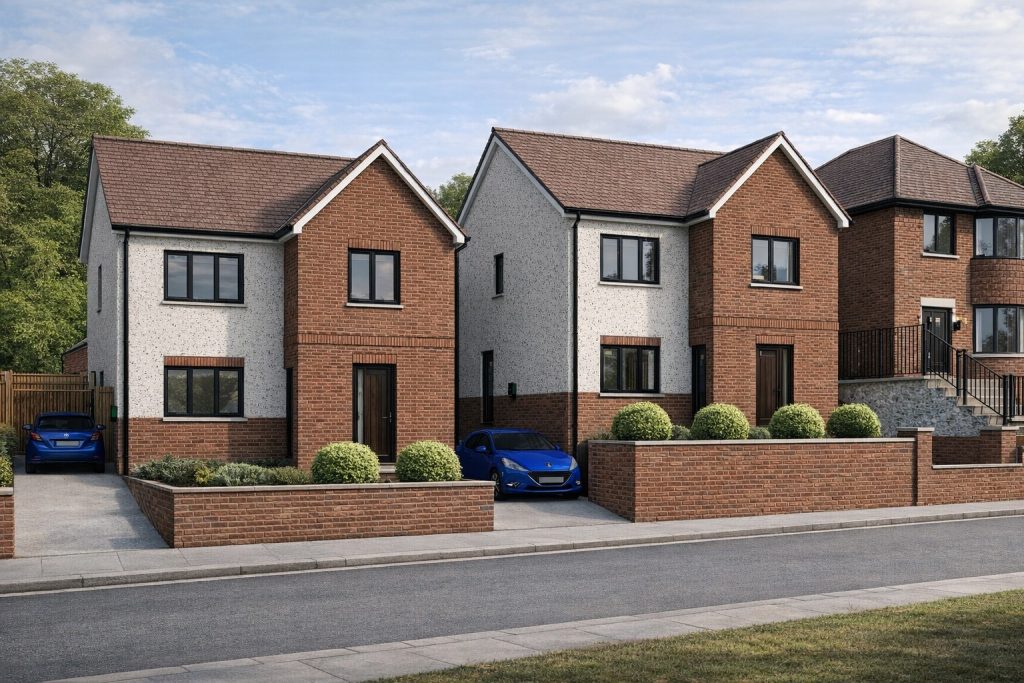
One of the biggest misconceptions around planning permission is that it follows a set of clear rules. The truth is, planning decisions involve a lot of interpretation and professional judgement.
Planning officers aren’t just checking if a proposal meets some arbitrary list of dimensions. They’re assessing how the development will affect the neighbours, whether it fits with the character of the area, and whether it meets the local planning policies.
A design that looks perfectly fine on paper may still get rejected because of concerns about overlooking, loss of daylight, visual impact, or the scale of the development. These are issues that require a careful analysis and some serious experience. While AI can give you some general planning guidance, it can’t reliably predict how a planning officer will interpret a proposal in its specific context.
This means that a design produced by AI may look fantastic, but still has the chance of not getting approved.
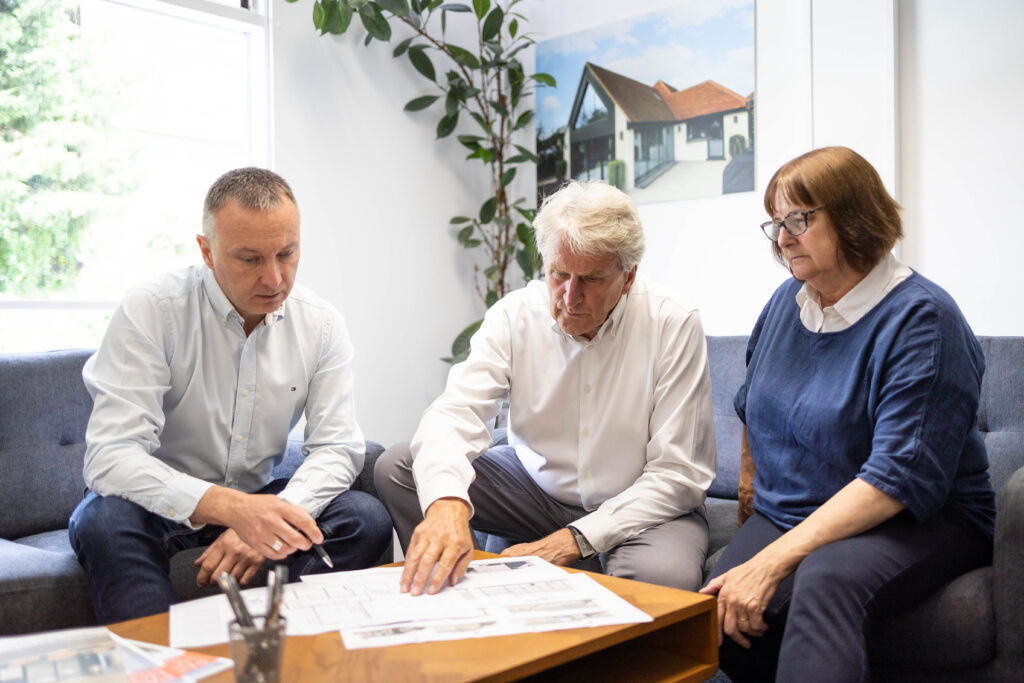
Another thing to consider is that planning decisions are heavily influenced by local authority policies. The planning application process also involves several key steps that the local planning authority handles.
While national planning guidance gives you a framework to work with, individual councils often introduce their own design guidance, supplementary planning documents, and local planning policies that can vary between areas.
An extension that’s likely to be approved by one council might get objected to by another, even if the proposals are identical.
Architects who work within a particular area frequently develop an understanding of local expectations through trial and error. They get to know the types of proposals that are generally supported and the issues that commonly lead to refusals. Planning applications usually take a few months to process, often around 2-3 months, depending on the case.
AI tools don’t possess this on-the-ground knowledge of local planning authorities. As a result, they often struggle to give reliable advice on the likelihood of success. The council may approve, conditionally approve or even refuse an application. Refusals can be appealed to the planning inspectorate.
Perhaps the biggest limitation of AI-generated designs is their inability to fully understand the unique characteristics of an individual site.
Every property has its own set of opportunities and constraints. Factors such as neighbouring windows, garden orientation, existing trees, boundary relationships, changes in ground level and drainage requirements can all influence the design process and planning outcome.
These details may seem minor at first glance, but they can have a huge impact on whether an extension is approved.
For example, an AI-generated rear extension may seem perfectly reasonable until a closer look reveals that it would overshadow a neighbouring garden or create overlooking issues that planners will never approve.
Similarly, a design that looks amazing in a rendered image may prove incredibly difficult or expensive to construct once structural requirements are taken into account.Without knowing the ins and outs of a particular website, AI simply can’t spot some of the risks that come up during a feasibility study.
The UK government recognises AI’s potential to improve the planning process. Recently, it introduced an AI-powered tool designed to speed up planning decisions and support the delivery of 15 million new homes. This shows a strong commitment to using AI to make planning more efficient and cost-effective.
While this AI tool helps decision makers by providing faster assessments and streamlining the planning application process, it does not replace the need for professional judgement and local knowledge.
Homeowners shouldn’t think of AI as a replacement for an architect’s know how, but instead as a great place to start.
Using AI can help get the creative juices flowing, help you explore different possibilities and give you ideas to get excited about. It also makes it easier for people to get the ball rolling on their project and explain what they want to achieve.
But the real value of using AI comes in when you can actually figure out if those ideas are going to work.
This is where having a professional on hand becomes really important. An architect with experience can tell you what the planning implications are, spot the potential pitfalls and suggest some changes that might actually make your project a success before you start sinking a lot of time and money into it.
By using a mix of AI generated ideas and some expert advice, you’ll be able to make better decisions and reduce some of the uncertainty that always comes with a home renovation project.
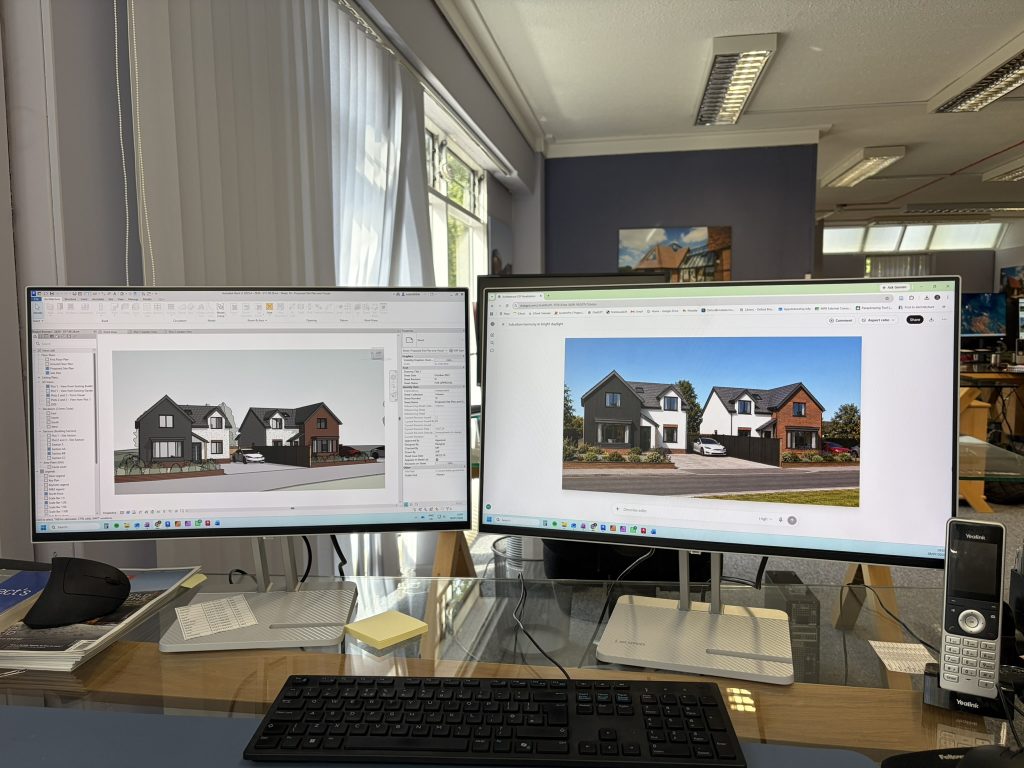
Artificial intelligence is changing the way people go about designing and developing extension ideas. It lets you create concepts in a flash, create some amazing visualisations and spark some creativity when it comes to your home.
However, getting planning permission is a lot more complicated than just designing something that looks nice. Factors like planning policy, what your local council expects, neighbour’s houses, site specific constraints and just how feasible it is to actually build something – all of these things can make or break whether your application is going to get approved.
While AI is brilliant at generating ideas, it still leaves much to be desired when it comes to figuring out the complicated parts.
If you’ve spent some time using AI, Pinterest or other online tools to design your extension, the next bit is to work out if your idea can actually be built and approved.
At MP Chartered Architects, we specialise in providing expert guidance to refine your extension ideas, ensuring you make informed decisions before committing significant time and resources.
Don’t leave your project to chance. Contact MP Chartered Architects today to turn your extension dreams into a reality.
A well-designed single-storey extension can completely change how you use your home. Rather than simply adding another room, the right extension can improve the entire

With temperatures rising and heatwaves becoming more common, are our homes really equipped to cope with a changing climate? Our Senior Architect, Dandi Passerini, recently
If you haven’t already noticed, Artificial intelligence (AI) is everywhere. It’s transforming industries around the world, and architecture is no exception. Today, homeowners can use